
TOMATO CATCH-UP - Newsletter Issue 241 – November 2021
Your monthly resource on working capital, process optimization, and issues related to the world of corporate treasurers, IT professionals, and bankers!
This newsletter is bilingual, English or German, depending on the source.
Introduction
Overshadowed by Covid, another global problem is currently under the radar: atmospheric carbon dioxide concentrations, which this May reached 418 parts per million, the highest level ever recorded in human history. Will the leaders gathered at COP26 agree on a viable plan to reduce carbon emissions? The plan will have huge implications for the global economy and all future business decisions. There is already talk about climate economics and circular technologies. What a future ahead! Exciting as well as challenging!
Remember that for any challenge related to your financial processes, you can ask Martin Schneider for a discussion that will clarify it. Contact Martin via email or call +41 44 814 2001.
This month’s Catch-Up includes topics such as challenges with Swiss QR invoices in an ERP, Schuldscheine with eNotes, cybersecurity resilience, Global Digital Trust, cloud software, ransomware and more.
- Prozessablauf von Swiss-QR-Rechnungen in Corporate: Aufwändig
- Highlights der Jahreshauptversammlung des VDT (Treasury Association)
- Simpler KYC for Corporate Treasury
- Ransomware ist schneller geworden und teuer für die Opfer
- The State of Cybersecurity Resilience 2021
- 2022 Global Digital Trust Insights Survey
- IFRS/IAS on Cloud-Based Solutions Expenses or Capitalized?
- Book Tip: Noise: A Flaw in Human Judgment
- Termine & Events
- From the Desk of Tomato
1. Prozessablauf von Swiss-QR-Rechnungen in Corporate: Aufwändig
Der Aufwand für uns Treasurer mit den Schweizer Lieferanten - QR-Rechnung ist enorm. Hat man dies bei der Planung bedacht / berücksichtigt?
Bis anhin wurden Lieferanten-Rechnungen über viele Jahre hinweg meistens mit dem Orangen Zahlschein ausgestattet. Diese Daten (Stammdaten) können im ERP wie SAP, D365, Abacus und Oracle bei der Rechnungserfassung hinterlegt werden.
Mit dem Wechsel nach QR-IBAN-Zahlschein ergibt sich eine neue Verbindung zur Bank, die folgende Prozessschritte einbindet:
- Erhalt der Lieferanten - Rechnung an die Kreditoren Buchhaltung
- Wenn die Rechnung neu mit den QR-IBAN oder QR-Rechnung ausgestattet ist, erfolgt die
- Prüfung der Rechnung durch die Kreditoren Buchhaltung (Acct.Payabels)
- Wenn QR - Weitergabe der Rechnung an die Abteilung Masterdata erfolgt ist, passiert das
- Anpassen der Stammdaten im Vier-Augen-Prinzip
- Auftretende Unsicherheiten bedingen der Nachfrage im Treasury und die Prüfung der Bankbeziehung.
Der Prozess bis zur Zahlung kann bis zu 3 Tage verzögert werden. Diese erhöhten Vorkehrungen zur Anpassung von Stammdaten wurden stufenweise in den letzten Jahren aufgrund von vielen CEO/CFO Fraud eingeführt. Die Planung des QR-IBAN war aber bei den Gremien/Instituten schon weit fortgeschritten.
In der Schweiz sind ein Jahr nach der Lancierung des QR-IBAN zum 01.07.2020 und knapp ein Jahr vor Ablaufdatum des ESR-Zahlscheines am 30.09.2022 aktuell sehr viele neue Kreditoren zu erfassen.
Mit der QR-IBAN Einführung erstellten wir für Sie eine Publikation auf tomato.ch
SAP Help Portal für Schweizer QR-Rechnungen
2. Highlights der Jahreshauptversammlung des VDT (Treasury Association)
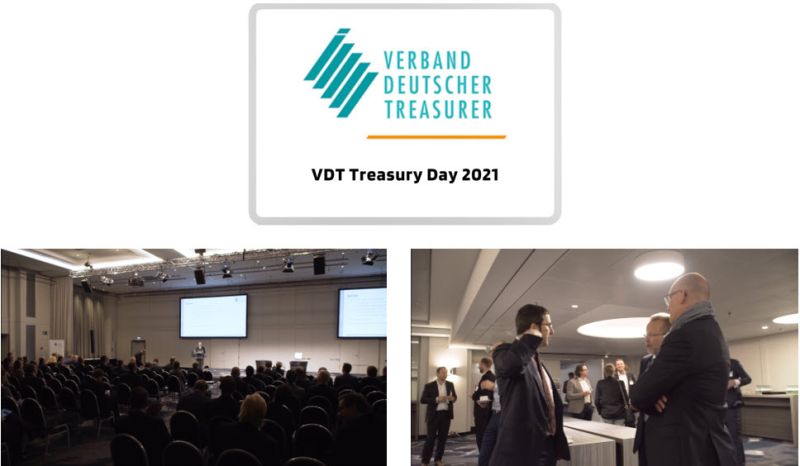
Meetings finden vermehrt wieder physisch statt. Ein Lichtblick im Corona virtuellen Meeting Zeitalter:
Die ordentliche Mitgliederversammlung konnte sich geordnet wieder treffen. 150 Teilnehmer kamen zusammen in Frankfurt.
Hier der öffentliche Link zum Ablauf der Versammlung. Das Protokoll und Video Mitschnitte stehen Mitgliedern im Mitgliederbereich zur Verfügung.
Hier geht’s zu einem kurzen 1:20 Video bei YouTube.
3. Simpler KYC for Corporate Treasury
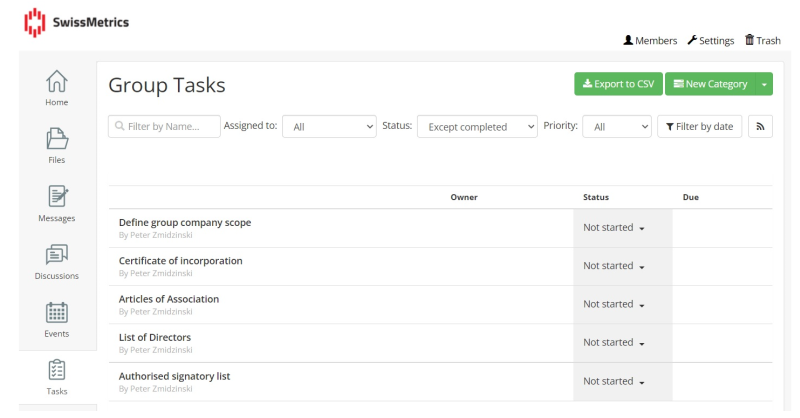
Peter Zmidzinski earlier Treasurer at Swissport in Zurich started his own career. I am happy to share his story here.
Anti-Money Laundering (AML) regulations and directives are an increasing obligation on banks and other financial institutions which require more and frequent information gathering on the companies they do business with. Due to the banking relationship mandate, corporate treasuries, typically, are the channel to communicate and transfer information with their bankers under a Know Your Customer (KYC) process initiated by banks. For many reasons, the information request is not standardized on a global level with some country specific initiatives starting to take shape. What does this mean for the corporate treasurer? Inefficiency, lack of control and effective security handling of sensitive corporate and director documents.
A company branded platform that provides immediate benefits:
- Efficiency through standardisation. Standardise over 90% of the process by providing access to typical corporate documents to relationship banks. Allow colleagues from legal and compliance to directly contribute documents to share workload and ensure business continuity.
- Control over process. Gain much need control over which documents are downloaded, printed or just seen on screen. A detailed audit trail shows access and usage of files by relationship bankers that have received your permission.
- Security. More advanced than emails. Enhanced security with 256-bit encryption, watermarking of documents, two factor login authentication, amongst others.
Bank acceptance to the platform is a critical factor in the success. The SwissMetrics platform is SaaS based run through any browser, does not require any client download which means easy accessibility to any bank. Setting standards with their clients, banks would be able to streamline their process and easily access all the necessary documents at a time that suits.
Are you interested to find out more about the SwissMetrics KYC for Corporate Treasury solution?
Ask for information via martin.schneider@tomato.ch or +41 44 814 2001.
4. Ransomware ist schneller geworden und teuer für die Opfer
Ransomware ist professioneller, schneller und für die Opfer teurer geworden. Wie Cybersecurity-Spezialist Eset** im zweiten Teil des "Threat Report 2021" aufzeigt, purzelten zwischen Mai und August 2021 gleich mehrere Lösegeldrekorde. Als Beispiel nennt Eset die Ransomware-Attacken auf das grösste Pipeline-Unternehmen in den USA - Colonial Pipeline - sowie den Angriff auf eine Schwachstelle in der IT-Management-Software Kaseya. In beiden Fällen sei es den Cyberkriminellen um den finanziellen Gewinn gegangen, nicht um Cyberspionage.
Die Beteiligung der Strafverfolgungsbehörden an den schwerwiegenden Vorfällen zwang mehrere Tätergruppen, das Feld zu räumen", sagt Roman Kováč, Chief Research Officer bei Eset.
Die Trickbot-Malware scheint zurück. Die Eset-Forscher stellten eine Verdopplung der Erkennungen von Trickbot fest und erkannten neue Funktionen:
Allein zwischen Mai und August verzeichnete Eset 55 Milliarden Angriffe. Im ersten Report 2021 waren es noch durchschnittlich 1392 Angriffe pro Person und Tag. Im zweiten Bericht sind es 2756.
** ESET ist ein Unternehmen für Sicherheitssoftware, gegründet 1992 in Bratislava. Es befindet sich in Privatbesitz und hat Niederlassungen in mehr als 200 Ländern.
Lesen die Details bei IT-Markt.ch
5. The State of Cybersecurity Resilience 2021
Accenture’s annual survey among 4,744 global respondents around on the current state of cybersecurity resilience shows that cyber-attacks are up, security investment continues to rise, and cloud still has a complex relationship with security.
Other key findings:
- 81% of CISOs said that “staying ahead of attackers is a constant battle and the cost is unsustainable” (69% in 2020);
- There were on average 270 attacks per company over the year, (31% increase over 2020);
- Successful breaches to the organization through the supply chain have increased from 44% to 61%;
- IT security budgets are now up to 15% of all IT spending (5% higher than in 2020);
- 32% say security is not part of the cloud discussion from the outset;
- Approximately one-third say poor governance and compliance is a problem, that cloud security is too complex, and that they do not have the internal skills to structure a proper cloud security framework.
Ensuring cyber resilience:
- Involve CISOs more: by drawing on the experience and insights of the leadership team, CISOs can gain a broader perspective that serves the whole business well;
- Security leaders must align with the business as partners in driving down risk;
- Reset security posture, earlier and more effectively, to the cloud.
Article in details at Accenture
6. 2022 Global Digital Trust Insights Survey
The “2022 Global Digital Trust Survey” by PwC is based on a survey of 3,602 business, technology, and security executives across the globe. It shows that companies may be overlooking the riskiest cyber threats of all: those originating from third parties and being enabled by the complexity of the organizations.
Other key findings:
- More than 25% expect double-digit growth in cyber budgets in 2022;
- Cybersecurity scorecards: 4 out of 10 organizations report significant progress in the past two years on four fronts:
- Instilling a culture of cybersecurity;
- Cyber risk management;
- Communications between management and board;
- Aligning cyber with overall business goals;
- 75% of executives report too much complexity in their organizations, leading to ‘concerning’ cyber and privacy risks;
- Only 40% say they thoroughly understand their third-party cyber and privacy risks.
You can download the whole PwC-report here. You need to give your name and email or ask the report at martin.schneider@tomato.ch
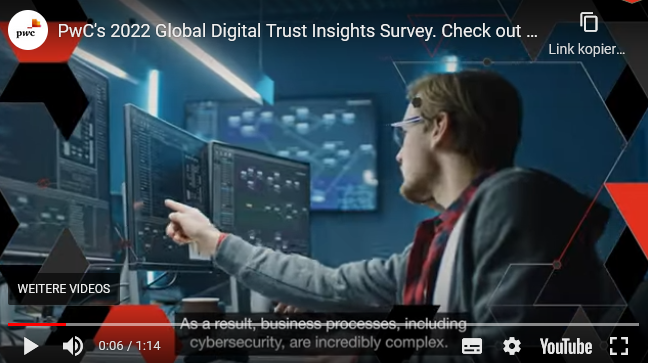
Or watch, pause, watch closely the PwC 1:15 minute video. You will get a lot out of it
7. IFRS/IAS on Cloud-Based Solutions Expenses or Capitalized?
International Financial Reporting Standards (IFRS) do not contain specific guidance on cloud-security practices which lead to diversity in practice. This was recently resolved by the IFRS Interpretations Committee. Frank Richter at KPMG explains the Committee’s decisions.
Cloud-based software ranges from simple application software to complex solutions like enterprise resource planning (ERP) systems. Complex solutions usually involve significant implementation costs. The accounting depends on whether the cloud-based software classifies as a software intangible asset or a service contract.
For software intangible assets, the requirements of IAS 38 Intangible Assets apply. For the latter, the IFRS Interpretations Committee (IFRS IC) developed specific principles to determine the accounting for each individual implementation service (or cost). Questions to consider are:
- Who is performing the implementation service?
- Is the implementation service distinct from the access to the software?
- Does the expenditure give rise to a separate intangible asset under IAS 38?
When do you need to apply the decisions made by the IFRS IC?
If your existing accounting policy needs to be amended, it will trigger a change in accounting policy, meaning that you will need to apply the new rules retrospectively. This requires adjusting the opening balance of equity for the earliest prior period presented and comparative amounts for each prior period presented as if the new accounting policy had always been applied.
Ziehen Sie Deutsch vor?
Die Implementierungskosten für Cloud Computing-Vereinbarungen können erheblich sein – Unternehmen müssen analysieren, ob diese Kosten bei Anfall als Aufwand erfasst oder aktiviert werden müssen. Die Entscheidung des IFRS Interpretations Committee («IFRS IC») vom März 2021 stellt klar, wie diese Analyse für Implementierungskosten durchgeführt wird, die in einem Cloud-Servicevertrag anfallen – d.h. wenn der Kunde keine Kontrolle über einen immateriellen Vermögenswert (Software) hat.
Details in Deutsch bei KPMG in PDF
8. Book Tip: Noise: A Flaw in Human Judgment
In this book, Daniel Kahneman, Olivier Sibony, and Cass R. Sunstein explain the damaging effects of noise in many fields, including medicine, law, economic forecasting, forensic science, bail, child protection, strategy, performance reviews, and personnel selection. The problem of noise is related to the fact that humans are unreliable decision-makers; their judgments are strongly influenced by irrelevant factors (mood, the time since their last meal, weather, etc.). The authors call the chance variability of judgments noise. It is an invisible tax on the bottom line of many companies.
Wherever there is judgment, there is noise. However, individuals and organizations alike are most of the times unaware of it. The authors claim that with a few simple remedies, people can reduce both noise and bias, and so make far better decisions.
In essence, this New York Times bestseller explains how and why humans are so susceptible to noise in judgment, and what they can do about it.

9. Termine & Events
- Nov. 11-27, 2021 Switzerland: Financial Reporting 90 minutes Breakfasts meeting 2021, by PwC Switzerland
- Nov. 18, 2021: Certified Corporate Treasurer VDT 2021 and 2022 Der Kurs umfasst vier Module zu je drei Tagen von Donnerstag bis Samstag und ein Modul zu je vier Tagen von Mittwoch bis Samstag mit acht 45-minütigen Unterrichtseinheiten pro Seminartag.
- Kursort: Frankfurt School of Finance & Management, Frankfurt am Main
- Module 1: 18.11. - 20.11.2021
Module 2: 20.01. - 22.01.2022
Module 3: 03.03. - 05.03.2022
Module 4: 04.05. - 07.05.2022
Module 5: 23.06. - 25.06.2022 - Nov. 23-24, 2021: Open Banking Expo Canada, virtual event
- Nov. 23-24, 2021: TECHEX Europe, on-site event, Amsterdam, Netherlands
- Nov. 24-25, 2021 Structured Finance Stuttgart, Die beliebte und bekannte Treasury und Finanzmesse findet wieder physisch statt. Eine virtuelle Teilnahme ist ebenso möglich.
- Nov. 24-25, 2021: 9th NextGen Payments & RegTech Forum, on-site event, Limassol Cyprus
- Nov. 25, 2021 Eastern Europe: CEE’S20: CEE SME Banking Club Conference, online event
- Nov. 25-26, 2021 Bucharest Banking 4.0: Rethink Innovation, hybrid event. International Conference dedicated to Emerging Technologies and new business models in the financial services industry
- Dec. 2-3, 2021 Paris: Paris Fintech Forum, on-site event
- Dec. 7-8, 2021 Miami: LendIt Fintech LatAm 2021, on-site and virtual event
10. From the Desk of Tomato
We promised to inform you about our ten days and 3.500 km road trip. Here is a recap of the trip, some observations and unexpected happenings. My son (19) and I started from Zurich driving to southern Italy. Then we crossed the Mediterranean to Albania, North Macedonia, back to Albania, along the coast to Montenegro, on to Bosnia-Hercegovina, Croatia, Slovenia, Trieste and back to Zurich. Eight countries in ten days! Our minivan, rented from roadsurfer.com, served as a fantastic backup-home in case we would not find a hotel. However, we stayed in some local pensions and small hotels where we were the only guests, the last ones of the season. Sometimes the heating needed to be turned on again or was simply “forgotten to turn on” again. It was important for us to touch base with locals, enjoy the gastronomy and local specialties.
We met only nice people, the end of season “tourist-less” landscape was ours – completely. And the attention of the locals was ours too. People loved our car; my son was happy to explain and show the Mercedes Roadsurfer over and over again. Also, at one of the customs, the people there wanted to have a detailed show of the van’s tech equipment.
The Mediterranean Sea, meandering rivers, lakes, large and deep valleys, forests, 1.500 meters high mountains, coffee breaks at small gas stations or Marcin brewing our own mid-afternoon Espresso on the gas stove in the van – a simple life on the road, 200 to 400 to 600 kilometers every day (depending on the quality of the road). The simple life well lived and thoroughly enjoyed!
Now that we are back, we are going to explore the simple life here with the locals.
Enjoy, Martin and the Tomato Team