TOMATO CATCH-UP - Newsletter Issue 286 - April 2026
Your monthly resource on working capital, process optimization, and issues related to the world of corporate treasurers, IT professionals, and bankers!
This newsletter is bilingual, English or German, depending on the source.
Introduction
According to the World Happiness Report 2026 released last month, excessive social media use contributes to a sharp fall in young people's well-being. The impacts are especially concerning for teenage girls in Western Europe and English-speaking nations.
How do you feel about your usage of social media platforms? Are you setting up usage limits to control how much time you spend on such platforms? You can read more about this year’s World Happiness Report at point 7.
This edition includes topics such as Treasury Solutions, Basel III, Banks Capital Requirements, Treasury 2026 Outlook, Petrodollar vs Petroyuan, AI Labor Market Impact, World Happiness Report, Equality, and more.
Remember that for any challenges related to your financial issues, you can ask Martin Schneider for a discussion that will clarify it. Contact Martin via email or call +41 44 814 2001.
- Wer ist wer: Überblick über verschiedene Treasury-Lösungen
- Q&A mit Tomato’s Interim Team
- Basel III: US-Easing Capital Requirements for Banks?
- Treasury 2026: The Need for Strategic Action
- Petrodollar vs Petroyuan: US-Dollar as Leading Currency
- Labor Market Impact of AI – Anthropic Report
- World Happiness Report 2026 – Main Findings
- Book Tip – Equality: What it Means and Why it Matters
- Termine & Events
- From the Desk of Tomato
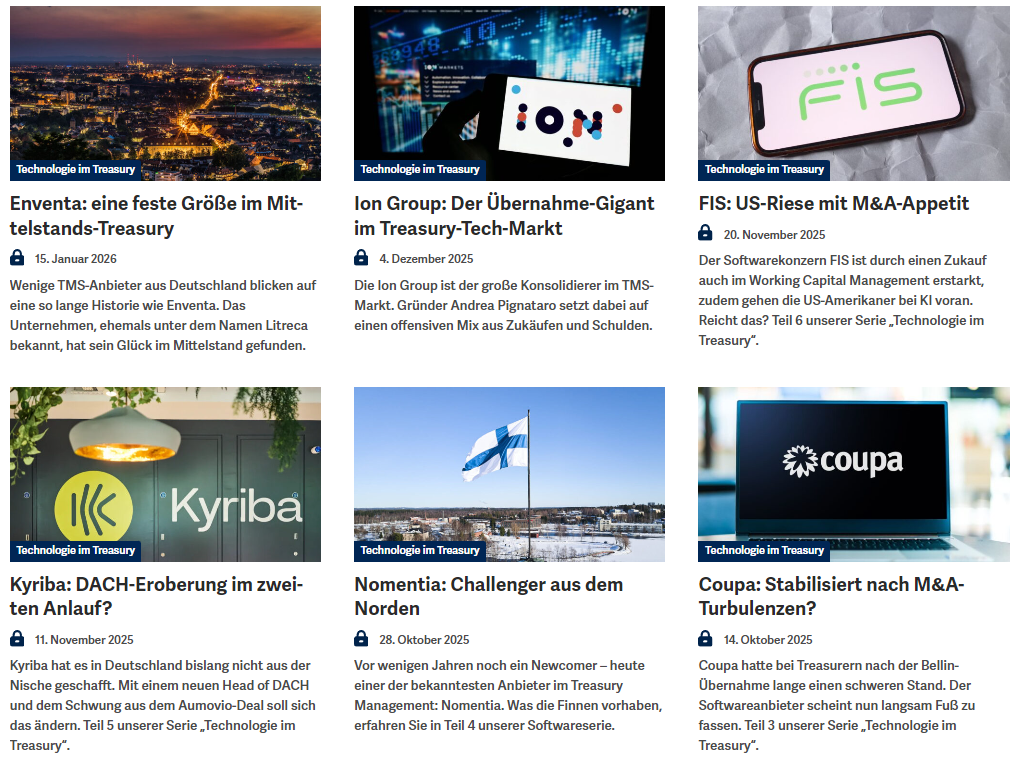
1. Wer ist wer: Überblick über verschiedene Treasury-Lösungen
Ein Bericht inspiriert aus DerTreasurer. Haben Sie sich schon einmal gefragt, wer in den verschiedenen Bereichen des Treasury Ihnen Unterstützung bietet könnte? Tomato nutzt regelmässig die Treasury Map von François Masquelier https://www.tomato.ch/blog/tag/treasury-map/. Es gibt noch einige weitere Anbieter, wie auch Tomato ist nicht gelistet.
Tomato’s Erfahrung: Die Wahl des TMS kann entscheidend für den Erfolg, wichtiger für Tomato ist bester Nutzen und reduzierter Zeitaufwand (Time, Quality, Money) und die zeitsparenden Schnittstellen zu ERP, Bank, Lieferanten, Kunden-Systemen Gruppenweit.
Warten «auf das beste TMS» (Prokrastination / vor-sich-her-schieben-auf-irgendwann) ist Gift. Auch wenn sich der TMS-Markt verändert sind wir der Meinung: Evaluate, Decide, GO, Make the best out of your decision !
Do you like first to reach out? Book a free meeting with Martin Schneider or call +41 44 814 2001.
Details in Deutsch bei DerTreasurer Abonnement notwendig
2. Q&A mit Tomato’s Interim Team
When not needed it is best to plan and know the market for urgent matters. Meet & Greet for short 15 minutes with Hans-Peter Fekter and Hervé Schall, Tomato’s team for Interim. We would like to introduce HP & Hervé with a Q+A:
Question to Hans-Peter: What raises the most interest when Interim?
Answer Hans-Peter: Cash management is my favorite topic, which involves ensuring that subsidiaries have sufficient liquidity or collecting cash surpluses. In this regard, I prefer automated processes, such as zero-based accounting (ZBA) or target balancing.
Question to Hervé: What are your preferred action items when Interim?
Answer Hervé: Protect the company’s financial resources and define a resilient risk-management approach.
Details at tomato.ch https://www.tomato.ch/en/people.html
3. Basel III: US-Easing Capital Requirements for Banks?
In Q1 2026, US federal regulators proposed easing bank capital requirements, a revision to Basel III regulations set up in 2017 following the financial crisis. The proposal would lower capital requirements by an estimated 4.8% for large banks and up to 7.8% for smaller banks, aiming to encourage lending. The proposals are subject to public comment period ending in June 2026. Critics fear this could lay the groundwork for the next banking crisis.
Details at US Federal Reserve
A public speech by Pablo Hernández de Cos, General Manager, Bank for International Settlements says on March 4th 2026 in Geneva:
- Banks have significantly strengthened their capital positions. Risk-based Common Equity Tier 1 (CET1) ratios now stand at 14.3%, compared with less than 10% in 2011
- Liquidity positions have improved. The share of high‑quality liquid assets held by banks has increased by 55% between 2012 and 2025 and stands at 21% today
- Finally, we must remember why we regulate. We regulate to protect citizens, to maintain trust in the financial system and to ensure that finance serves the real economy. These principles are timeless, even as the financial system and regulation evolves
Details of the speech at BIS (Bank for International Settlements) PDF 17 pages
4. Treasury 2026: The Need for Strategic Action
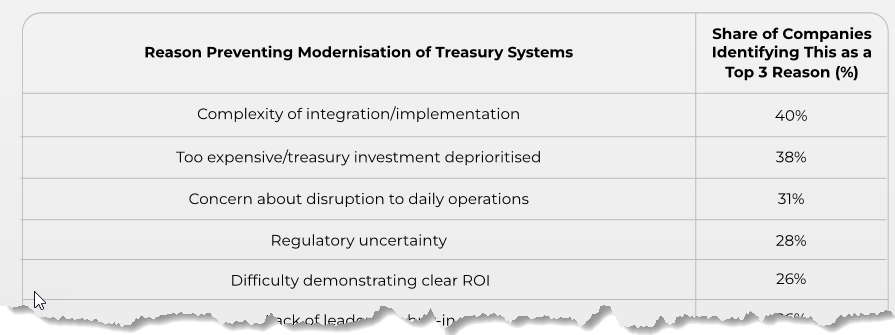
A study by Nomentia and Juniper Research, "Treasury Trends Report 2026," reveals the focus areas for treasurers in 2026. The report surveyed 384 senior finance and treasury decision-makers from four European regions (Nordic, Benelux, DACH, UK). The main finding is related to the industry’s priorities today: 51% of respondents cite automation, 39% increased liquidity resilience, and 38% say improved forecast accuracy is their top priority.
Tomato’s 30-year experience agrees with these views: There were 104 respondents from Germany and Austria in the sample. According to the article, UK companies lead in treasury maturity, followed by the DACH region, which boasts a higher percentage of excellent maturity ratings than Benelux and the Nordics.
Other key findings:
- Bank-Auto-Connecting: only 17% of companies connect directly to their banks via API.
- Real-time bank connections: 19% of companies have a fully integrated, real-time connection.
- Bank connection not uniform: 35% report not using a uniform connection method.
- Treasury Centralization Processes 100M to 500M: 9% across Europe, report a lack of centralization.
- Treasury Centralization Processes >1bn: 42% compared to exceeding 1bn have structured processes.
- Where do you stand? Page 9 -> Check the 5-steps: Ad-Hoc, Basic, Operational, Strategic, and Predictive.
In German details at DerTreasurer, move to page 9-
In English, the full 38 pages report at Nomentia: (your contact details are required).
5. Petrodollar vs Petroyuan: US-Dollar as Leading Currency
Bericht zusammengestellt aus dem Buch Kenneth Rogoff** «Our Dollar, Your Problem» der NZZ und Fortune.
Mit dem Wegfall des US-Goldstandard 1971 (Bretton Wood) veränderte sich viel für die künftigen Treasurer dieser Welt. Fremdwährungsrisiken mussten gehdged / gesichert werden.
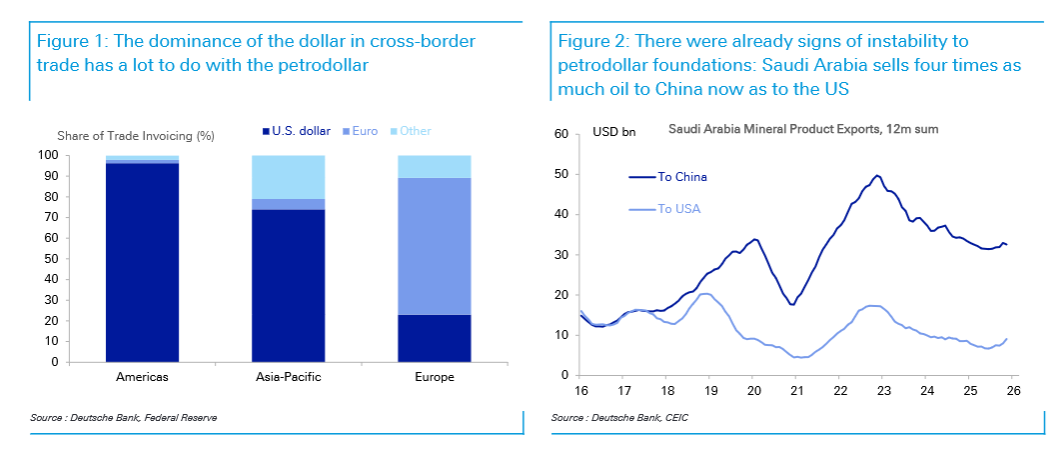
Das bekannte Petrodollar-System entstand als Reaktion auf die diese Währungskrise. Die USA konnten den Umtausch in Gold nicht mehr garantieren, das Handelsdefizit geriet ausser Kontrolle. Mit Saudi-Arabien entstand 1974 eine Partnerschaft, Saudi-Arabien erklärte sich bereit die Oel-Verkäufe in USD abzurechnen. Der Goldstandard wurde somit durch einen „Rohstoffstandard“ ersetzt. Der USD wurde zur Weltreservewährung.
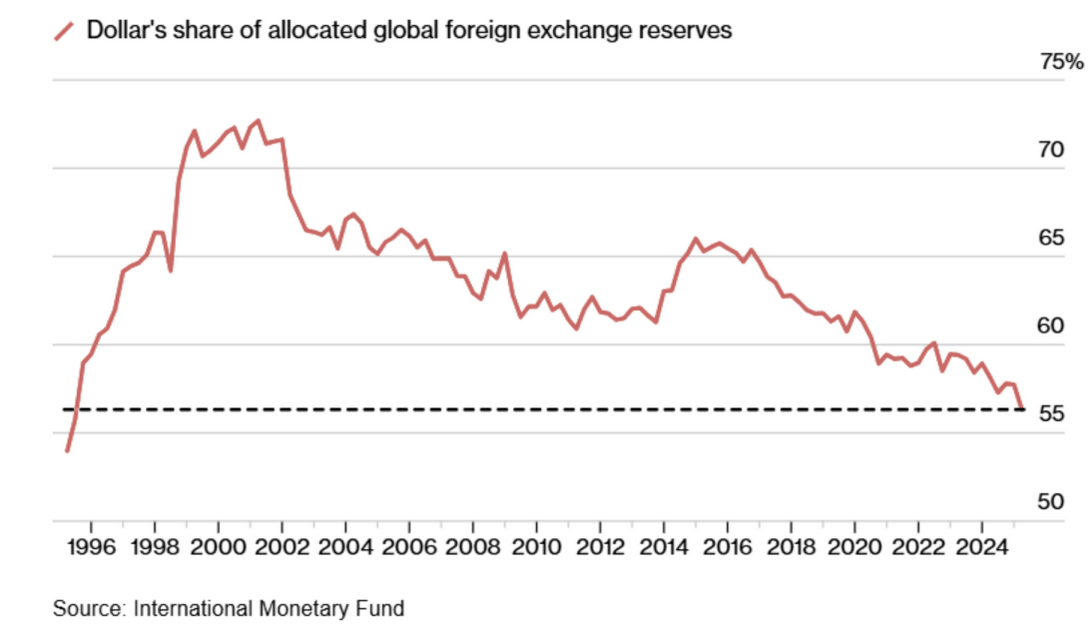
Kenneth Rogoff wie auch Berichte von Deutsche Bank und JP Morgan sehen allenfalls ein Ende des bestehenden „Petrodollar“-System.
Petroyuan sind Rohöltransaktionen in chinesischem Yuan seit 2018 und ermöglicht es Russland, dem Iran oder Venezuela, die Abhängigkeit vom USD zu verringern. Die Chinesische Zentralbank kontrolliert den Wechselkurs. Sie kann diesen nutzen den Kurs künstlich niedrig zu halten, was aber den Wettbewerb verzerrt. Die Grösse der chinesischen Wirtschaft gleicht diesen Nachteil jedoch aus: China wurde der wichtigste Handelspartner für 120 Länder.
Details in Deutsch bei NZZ monatlich einige Artikel frei lesbar
Do you prefer English?
An article based on Kenneth Rogoff’s «Our Dollar, Your Problem» and Fortune.
The modern petrodollar system emerged in the 1970s in response to the currency crisis of that time. The gold standard was replaced by a ‘commodity standard’ covering the entire oil trade. In the decades that followed, the dollar defended its status as the world’s leading currency.
Kenneth Rogoff and reports from Deutsche Bank and JPMorgan suggest that the current ‘petrodollar’ system may be coming to an end.
The Petroyuan, which refers to crude oil transactions settled in Chinese yuan, was introduced by China in 2018. It serves as an initiative to challenge the long-standing ‘petrodollar’ system. The Chinese central bank controls the exchange rate and keeps the rate artificially low. However, the size of the Chinese economy offsets this disadvantage. China became the most important trade partner for 120 countries.
Details in English at Fortune
**Kenneth Rogoff has been a professor at Harvard University since 1999. Between 2001 and 2003, he served as Chief Economist of the International Monetary Fund (IMF).
Details at Rotbart, an advisor in physical metals.
6. Labor Market Impact of AI – Anthropic Report
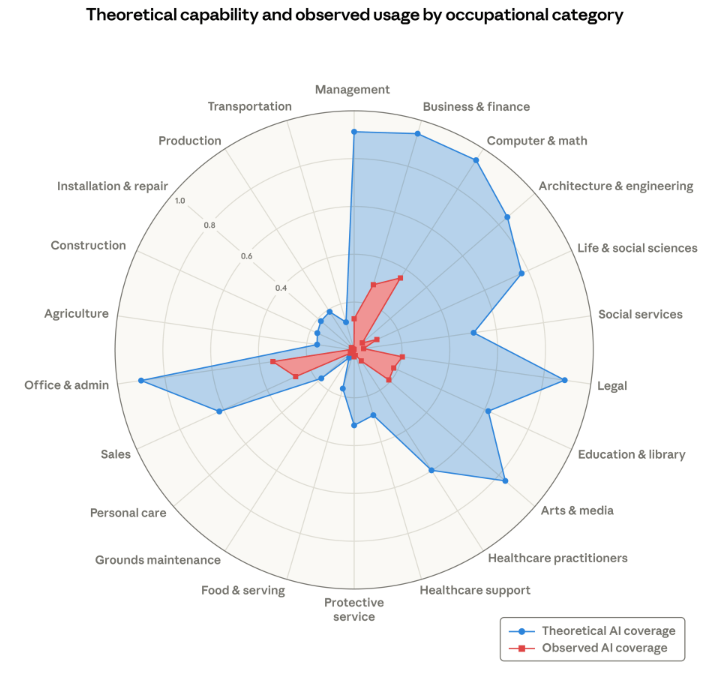
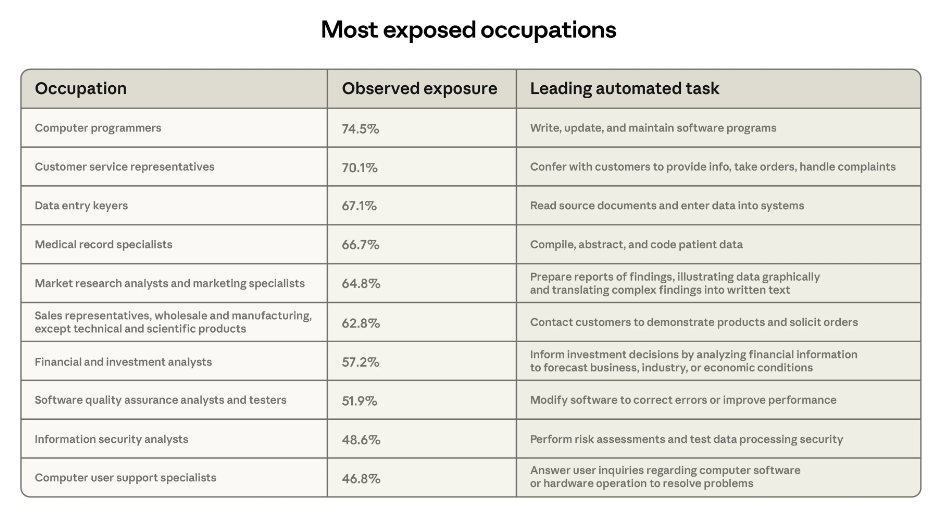
A recent Anthropic report, „Labor market impacts of AI: A new measure and early evidence,“ focused on 800+ occupations», emphasizes that white-collar jobs and intellectual employment are at the biggest risk.
Key findings:
- AI is still only a small portion of what is possible.
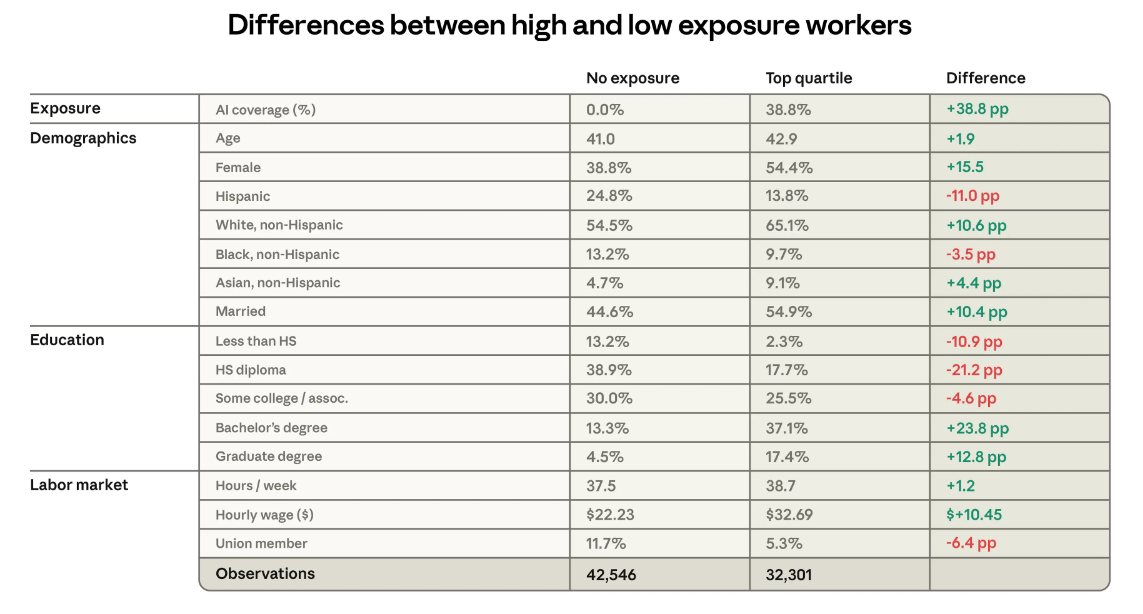
- Those in highly vulnerable jobs tend to be women, older workers, highly educated, and better paid
- Youth hiring (ages 22-25) is cooling, with job-finding rates 14% lower than in 2022, even though overall unemployment has not yet spiked.
Other key data, in the graphs below.
7. World Happiness Report 2026 – Main Findings
The 2026 edition of the World Happiness Report highlights changes in life evaluations over time, across countries, and across generations.
Main findings:
- People under 25 are happier now (2023–2025) than they were roughly 20 years ago (2006–2010) in 85 out of 136 countries.
- On a scale of 0 to 10, the happiness of those under 25 decreased by an average of 0.86 points in the US, Canada, Australia, and New Zealand over the previous 20 years.
- In 47 nations, the well-being of young students who use social media for more than seven hours a day is significantly lower than that of those who use it for less than an hour.
- The Nordic nations are once again at the top of the global happiness rankings.
- While youth happiness has decreased in several Western countries, people under 25 are happier than they were 20 years ago in the majority of countries.
- Adolescents who use social media problematically report more psychological issues and a lower quality of life.
- A large portion of the well-being loss among Gen Z and millennials can be attributed to declines in interpersonal trust, institutional trust, perceived social engagement, and frequency of social meetings.
- Older persons exhibit increased resilience, which is reinforced by a stronger sense of patriotism and more consistent levels of trust.
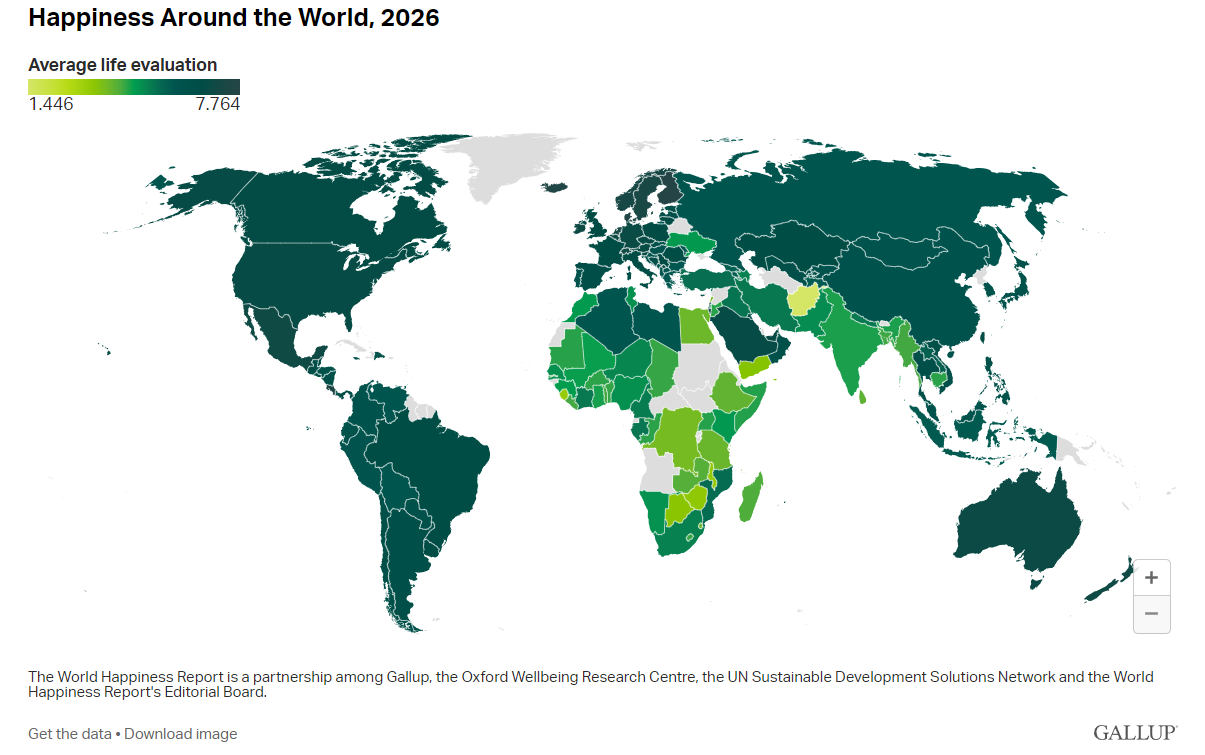
Access the full report at Gallup and the interactive mapping with each country’s ranking
8. Book Tip – Equality: What it Means and Why it Matters
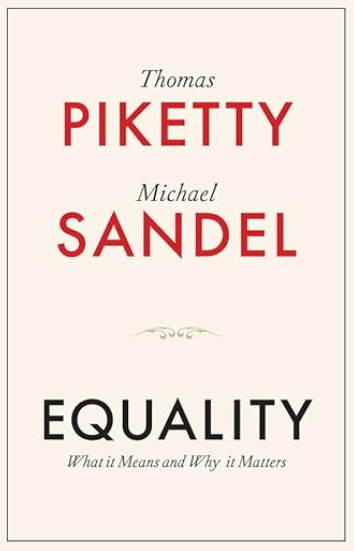
In this book, two well-known intellectuals discuss the importance of equality and what citizens and governments should do to close the inequalities that divide us. Thomas Piketty and Michael Sandel examine our progress toward more equality in a variety of fields, including philosophy, economics, history, and current events. They also confront the stark differences in wealth, income, position, and power that still exist.
In a period of severe political unrest and environmental crisis, what can be done? Piketty and Sandel agree on several things, including greater progressive taxation, more equitable investments in health and education, limiting the influence of the wealthy in politics, and limiting the overreach of markets. However, given the resurgence of nationalist forces, what are the chances of any change at all? What role should the left play in promoting ideals like local unity and patriotism? The two writers attempt to address these issues and conclude that equality never comes quickly or without deep social conflict and political struggle.
9. Termine & Events
- Apr 23, 2026:Agentic AI & Automation in Finance Summit, Frankfurt, Germany
- Apr 23, 2026: Treasury 360° Nordic 2026, Gothenburg, Sweden
- May 6-8, 2026 Finanzsymposium by SLG Wien, neu nun in Wiesbaden in Deutsch
- May 12, 2026: ENBANTEC Cyber Security Conference and Exhibition, Istanbul, Turkey
- May 12-13, 2026: ACT Annual Conference 2026, Liverpool, UK
- May 19-20, 2026: Stablecoin 2026, Amsterdam, The Netherlands
- May 19-22, 2026: European Identity and Cloud Conference 2026 (EIC 2026), Berlin, Germany
- Jun 10&11, 2026: ACTA in Wien, Mitgliederversammlung, in Deutsch; Dinner 10.06.& Assembly 11.06.
- Jun 11-13, 2026: CEE Treasury Forum 2026, Siofok, Hungary
- Jun 19, 2026 SwissTreasurer Forum & Assembly General 2026 à Genève en Français
- Aug 31-Sep 2, 2026: 10th Central Bank Payments Conference, Istanbul, Turkey
- Sep 9-11, 2026: Stablecoin 2026, Washington, USA
- Sep 14-15, 2026: MoneyLive North America, Chicago, USA
- Sep 15, 2026: Swiss Treasury Summit 2026 by HSLU in Rotkreuz / Lucerne in Deutsch
- Oct 7-9, 2026: Alpbacher Finanzsymposium, Tirol Österreich in Deutsch
- Nov 3, 2026: ePay Europe Summit eCommerce Payments 2026, London, UK
- Nov 25-26, 2026: Structured Finance, Stuttgart, in Deutsch
10. From the Desk of Tomato
The shortened four-day weeks between Easter and Pentecost: how do we handle them?
For me, I like my profession as Treasury Navigator for our international clients.
In Spring I usually struggle since many years, with sunny early evenings between finishing paperwork and my inner freedom to go for a stroll, spend time with friends and family, or simply breathe in the fresh air.
The most important treasury tasks – securing company funding, optimizing liquidity, TMS and IT projects, and improving workflows – don't manage themselves, even though the sunny, longer days encourage distraction.
While we continue our AI strategy discussions, we believe that active front-office engagement is still essential to help top management navigate global instability, inflation, and rising interest rates.
Make good decisions
Enjoy from the Tomato Atelier