
TOMATO CATCH-UP - Newsletter Issue 289 - September 2026
Your monthly resource on working capital, process optimization, and issues related to the world of corporate treasurers, IT professionals, and bankers!
This newsletter is bilingual, English or German, depending on the source.
Introduction
Welcome back from your Summer Holidays! Thank you for your loyal readership. Tomato Team is happy to have you back as a reader. How do we surprise you?
Will AI eliminate human employment and leave us with nothing to do? That doesn't appear to be the case as of now. 443 million hours of digital workplace activity across 1,111 organizations and 163,638 employees were examined by ActivTrak researchers, who discovered that adopting AI made people's work lives more demanding rather than less. Collaboration surged 34%, multitasking rose 12%, and weekend work increased more than 40%. How about for you, is AI having similar or different effects on you and your work?
Artificial intelligence requires human intelligence, common sense sometimes with a sense of humor
This edition includes topics such as Tomato Brown Bag Lunch, did you sign up for Swiss Treasury Summit?, Swiss Taxes, vIBAN vs Cashpooling, Disaster Recovery, Commodity Hedging, Cybercrime, and more.
Remember that for any challenge related to your financial issues, you can ask Martin Schneider for a discussion that will clarify it. Contact Martin via email or call +41 44 814 2001.
- Tomato Brown Bag Lunch 5. Oktober
- XML pain.001.001.09 per 15. November 2026
- Virtual Accounts versus Cash Pooling
- Listings of Upcoming Changes Around Swiss Taxes
- Commodity Heding: Stable prices help suppliers and clients
- Risk Mgmt: The Value of a BCM – Business Continuity Manual
- Risk Mgmt: Aus früheren Cyberverbrechen lernen
- Book Tip – Amerikas Demokratie: Eine kurze Geschichte von der Unabhängigkeit bis Donald Trump
- Termine & Events
- From the Desk of Tomato
1. Tomato Brown Bag Lunch 5. Oktober
Am 5. Oktober von 12-13.30 Uhr treffen sich Treasurer und Finanzfachleute der Region Zürich in Winterthur beim Gastgeber Autoneum. Es hat noch Plätze frei, möchten Sie teilnehmen? Telefonisch buchen 044 814 2001 oder mit Email bei Martin Schneider.
Wir freuen uns auf deine Anmeldung. Montag, 5. Oktober ist während den Zürcher Herbst-Schulferien. Für diejenigen die den Tag passend finden, freuen sich Martin Schneider und Janko Hahn auf dich.
Details: https://www.tomato.ch/brown_bag_lunch.html

2. Neues XML pain.001.001.09 per 15. November 2026
Aufruf: Sind in ERP, Lieferanten- und Kundensystemen der Strassenname von der Hausnummer in einem separaten Feld, der Name des Ortes von der Postleitzahl getrennt? Können Sie geruhsam das Projekt als getestet und beendet erklären? Wir gratulieren Ihnen!
Die bisherige XML-2009-Version endet im November 2026 nachher wird es bei der Bank Fehlermeldungen geben.
En Français,
dernier appel : dans les systèmes ERP, fournisseurs et clients, le nom de la rue est-il indiqué dans un champ distinct du numéro de rue, et le nom de la localité est-il séparé du code postal ? Pouvez-vous sans crainte déclarer le projet testé et terminé ? Nous vous félicitons !
La version actuelle XML 2009 arrive à échéance en novembre 2026 et, après la banque affichera des messages d'erreur.
In English,
last call: In your ERP, supplier, and customer systems, are the street name and house number in separate fields, and is the city name separated from the ZIP code? Can you confidently declare the project being tested and completed? Congratulations!
The current XML 2009 version will expire in November 2026; the bank will display error messages.
Consult Tomato Esra Kummer for details.
Details in Deutsch bei Treasurer VDT
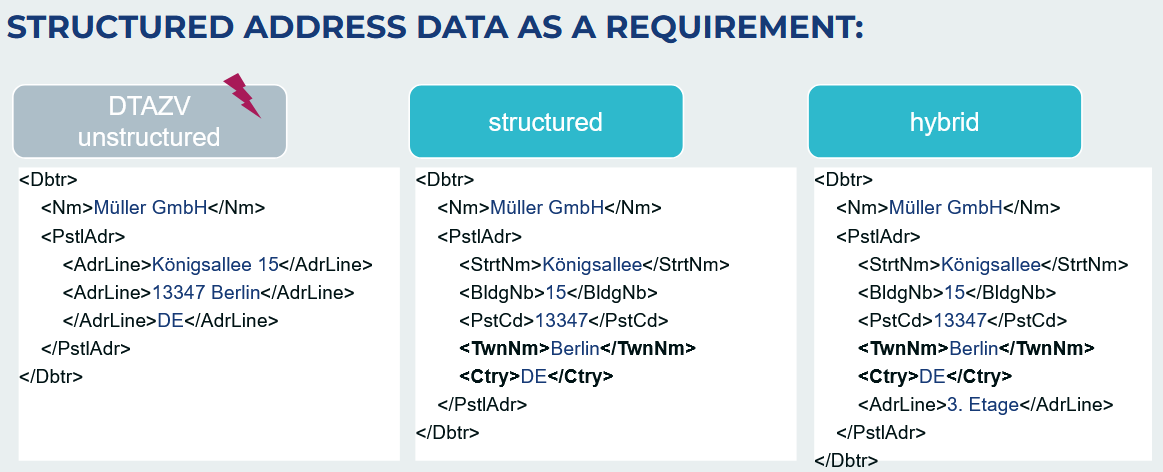
Source picture at Consilio GmbH
3. Virtual Accounts versus Cash Pooling
Bei Tomato Finance+IT werden wir regelmässig befragt, ob virtuelle Konten das Zero Balancing Cash Pooling ersetzen könnten. Wir sind der Meinung, dass vIBAN und Cashpools zwei verschiedene Dinge sind.
- Mit dem Cashpool führt ein Konzern die kurzfristige Liquidität zusammen.
- Mit vIBAN können Kundenzahlungen bestimmten Kunden von vIBAN übergeben werden und deren Zahlungen besser zugeordnet werden und automatisch reconciled werden.
Die BaFin verfügt ab Juli 2026 eine bessere Kontrolle über vIBANs, dies bis zum 10.Juli 2027 bis zum Inkrafttreten der europäischen Geldwäscheverordnung (AMLR).
Do you prefer English?
At Tomato Finance+IT, we are regularly asked whether virtual accounts could replace zero-balancing cash pooling. We believe that vIBANs and Cashpools are two different things.
- A corporate group uses a cash pool to consolidate its short-term liquidity.
- With vIBAN, customer payments can be routed to specific vIBAN accounts, allowing for better allocation of payments and automatic reconciliation.
On July 2026, German BaFin implemented a more rigorous review of vIBANs; this will remain in effect until July 10, 2027, when the European Anti-Money Laundering Regulation (AMLR) takes effect.
4. Listings of Upcoming Changes Around Swiss Taxes
The list below shows the pending amendments to laws and regulations concerning direct federal tax, VAT, withholding tax, and stamp duties (2027-2029), as per ESTV.
- VAT - Amendment to the Federal Act on Withholding Tax – Jan 1, 2027
- AIA - Federal Act on the International Automatic Exchange of Information on Wage Data (AIALG) – expected date Jan 1, 2027
- Crypto Assets - Federal Decree on the Introduction of the Automatic Exchange of Information on Crypto Assets with the Relevant Partner State – earliest date Jan 1, 2027 (however, this is based on a Federal Council decision, as Parliament is no longer responsible)
- Expenses of Employees - Federal Law on the Tax Deduction of Professional Expenses of Employees – earliest date Jan 1, 2028
- Federal Law on Individual Taxation – expected date Jan 1, 2032
Source in four languages (DE, FR, IT, EN) at Swiss Federal Tax Administration FTA
5. Commodity Heding: Stable prices help suppliers and clients
The world is still on ~80% primary resources (oil 23%, natural gas 22%, coal 27%). Source at statistica.com
Electricity prices are connected to natural gas prices.
Oil prices in 2026 are at turbulent high levels. A sunny, dry Summer in 2026 showed how vulnerable low Rhine water levels are. What are your actions in Treasury, CFO, and the Board of Directors? Does your company hedge commodity prices for the company itself, its clients, and its suppliers?
Make us of Tomato’s deep expertise in global commodity markets. Read also:
- Hedging in Tomato News Sep-2024.
- An HSLU Podcast and interview in Nov-2024, which gave insights into how Treasury supports Electricity and Gas purchasing.
Treasurers fluently hedge currencies and interest rates. This ensures clients and suppliers do not lose the production and sales margin due to currency losses. The same applies to commodity prices, especially energy prices.
Do you know how much a price increase affects a corporation? Let’s think of a company with annual sales of EUR 250 million. A 5% escalation equates to an approximate increase of EUR 10 million. How much does a treasury hedging project cost?
We are happy to consult you. Contact Martin Schneider by email or phone +41 44 814 2001.
Treasury can actively smoothen commodity prices with these actions.
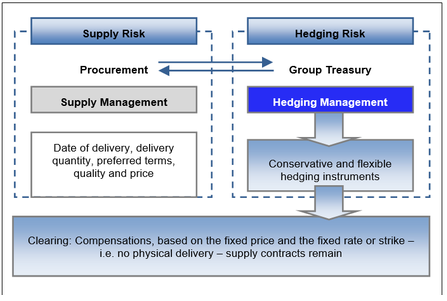
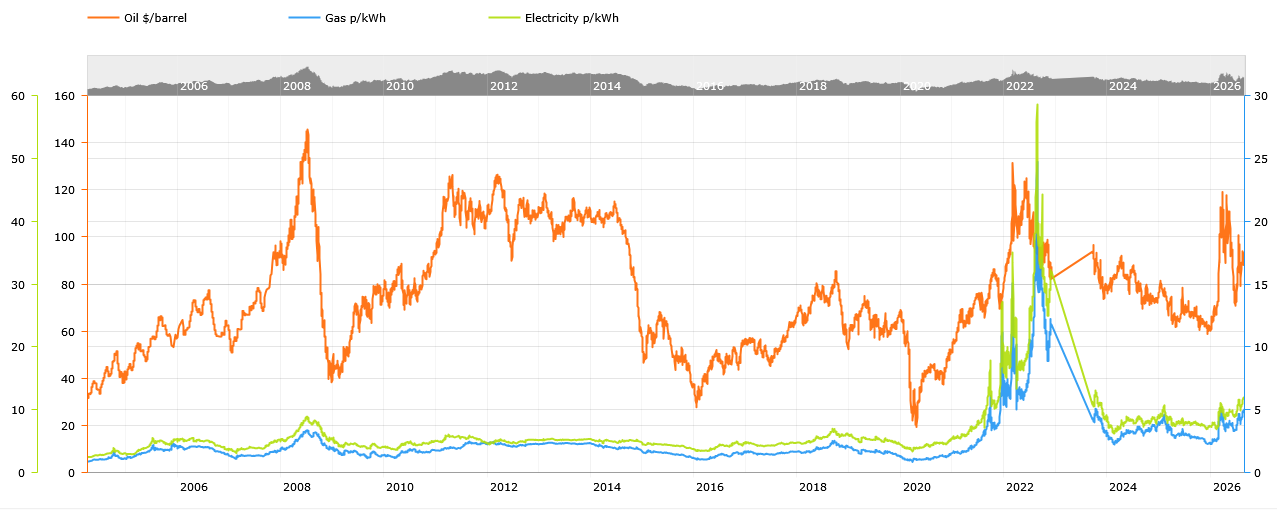
Chart delivered from Clifford Talbot
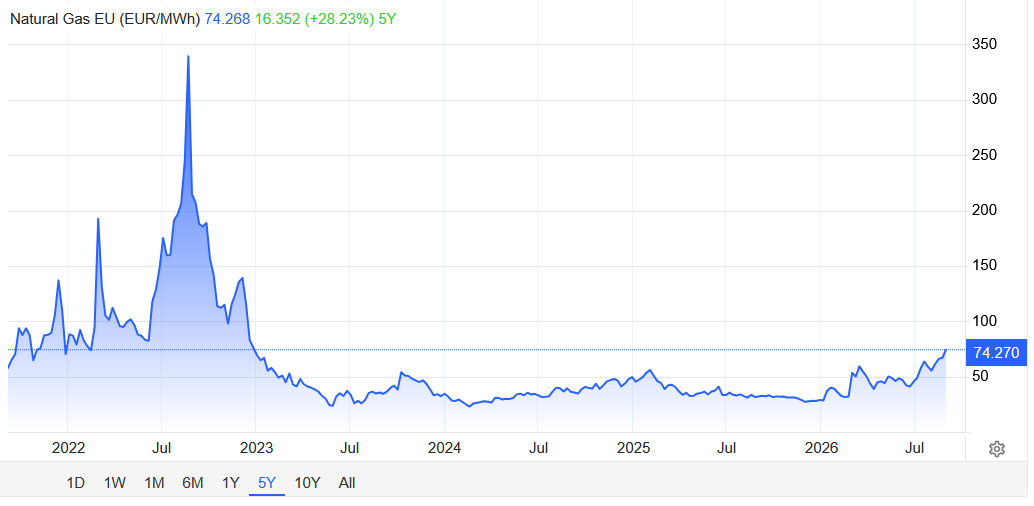
Natural Gas Chart Source Trading Economics
6. Risk Mgmt: The Value of a BCM – Business Continuity Manual
Do you protect yourselves with a BCM, also known as a Disaster Recovery Manual?
To keep our clients, especially IT companies, running, Tomato creates short and concise Disaster Recovery Manuals (DRM).
Consider the following incident: A significant fire at the NorthC data center in Almere, North Holland, on the morning of May 7, 2026, severely disrupted public transit, health care services, and Dutch universities.
- Students in Utrecht are locked out; electronic key cards aren’t working.
- In some buildings, even the restrooms are no longer accessible.
- The university’s intranet and several websites are down.
- Study materials can no longer be downloaded.
- Exams scheduled for the following days have been cancelled.
- Widespread confusion in WhatsApp groups.
Around noon, the university issues a statement via a live blog. Students are urged to minimize their use of the systems as much as possible.
This is merely an example; any business can be harmed and needs to restore IT systems and data after an unexpected outage or disaster. Why not use a BCM or DRM to protect the company and reduce costly downtime?
Type Keywords in AI or read details at datacenterdynamics.com
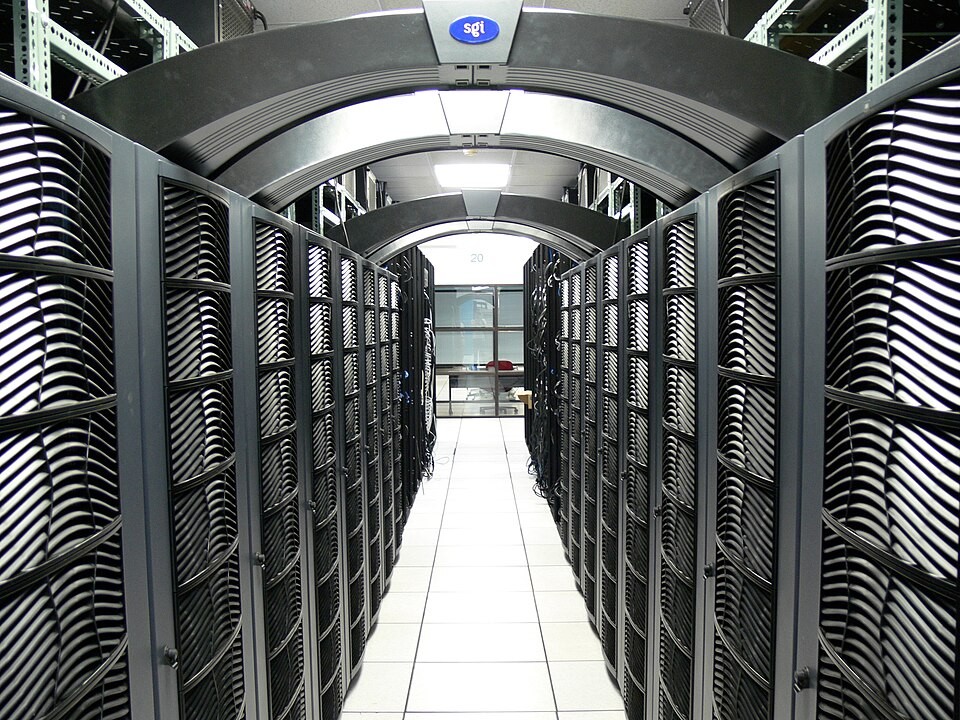
Source: Christopher Bowns, Virginia Tech - data center, CC BY-SA 2.0
7. Risk Mgmt: Aus früheren Cyberverbrechen lernen
Datendiebstahl, Hacking und Lösegeld sind weltweit verbreitet. Es gibt auch einige Erfolge. Das Wichtige bleibt weiterhin die aktive Mitarbeiterschulung. Vor allem motivierte Mitarbeiter zu haben, die sich für ihren Arbeitgeber einsetzen. So lässt sich das Angriffs Risiko minimieren.
Der Fall Crealogix kommt im September 2026 vor Schweizer Gerichten.
Cyberverbrechen in Schrift und Video und sind nur so weit interessant, wenn jeder von uns seine eigenen Lehren daraus zieht und vorsichtig agiert im Berufs- und Privatleben.
Suchen Sie Details mittels KI und Schlüsselwörter: «Ransom Angriff auf Crealogix». «Ransom Angriff auf Bossard Farben» «Tagebuch des Ransom Angriff auf NZZ»
Do you prefer English?
Data theft, hacking, and ransom demands are widespread worldwide, with some success. The key remains active employee training. Above all, it’s important to have motivated employees who are committed to their employer. This is how the risk of attack can be minimized. The Crealogix case will be heard in Swiss courts in September 2026.
Folgend ein ernüchterndes Video von NZZ-Format. Dauer 29 Minuten in Deutsch.
Ihr Feedback erreicht uns und/oder besprechen Sie Ihr Vorgehen mit Martin Schneider unter +41 44 814 2001.

Source: Betancort 741, Seguridadenso, CC BY-SA 4.0
8. Book Tip – Amerikas Demokratie: Eine kurze Geschichte von der Unabhängigkeit bis Donald Trump
Am 4. Juli jährte die Unabhängigkeit der Vereinigten Staaten zum 250. Mal. Ich schrieb in Desk of Tomato darüber
Wer einen luziden Überblick sucht, findet Manfred Berg. Der in Heidelberg lehrende Historiker schrieb aufsehenerregende Bücher über die Bürgerrechtsbewegung, die Lynchjustiz oder die Spaltung des Landes seit den 1950er Jahren. In Zeiten, in denen der Blick über den Atlantik verklärt ist und Verunsicherung auslöst, bietet dieses Buch Orientierung mit Zuversicht statt Untergangsrhetorik.
Viel Freude und Spass beim Lesen

Link to the book on Amazon 240 Seiten
9. Termine & Events
- Sep 11, 2026: Baltic Treasury Conference, Riga, Latvia
- Sep 15, 2026: Swiss Treasury Summit 2026 by HSLU in Rotkreuz / Lucerne in Deutsch
- Sep 16-18, 2026: Finance International Treasury Management, Barcelona, Spai
- Sep 22-23, 2026: ACT Middle East Treasury Summit 2026, Dubai, UAE
- Sep 24, 2026: Treasury 360 Europe, Luxembur
- Oct 5, 2026: Tomato Brown Bag Lunch, Winterthur, Switzerland
- Oct 7-9, 2026: Alpbacher Finanzsymposium, Tirol Österreich in Deutsch
- Nov 3, 2026: ePay Europe Summit eCommerce Payments 2026, London, UK
- Nov 4, 2026: Instant Payments Summit, Toronto, Canda
- Nov 8-11, 2026: AFP 2026 Conference, Las Vegas, USA
- Nov 11, 2026: ACT Annual Dinner, London, UK
- Nov 24, 2026: TreasuryTech 2026, London, UK
- Nov 25-26, 2026: Structured Finance, Stuttgart, in Deutsch
10. From the Desk of Tomato
The past few years have been highly demanding for your IT and Payments departments.
Keeping pace with constant, mandatory updates from ERP suppliers and client systems has been essential just to ensure seamless, error-free communication with your banking network.
Key milestones include the ongoing global transition from text-based messaging to SWIFT XML, the introduction of Verification of Payee (VOP) in October 2025, and a wide array of specific banking requirements. We have successfully managed these diverse adjustments across various banks for our clients. Currently, in 2026, we are actively implementing the long-advised Structured Address updates, as detailed in article 2 above. The older XML 2009 version is now changed to XML 2019. Some banks strictly require the XML 2019 version which simultaneously demands an upgrade of the communication channel to EBICS 3.0
ENJOY - Cooked up with care by the Tomato Atelier Crew 😊