
TOMATO CATCH-UP - Newsletter Issue 240 - October 2021
Your monthly resource on working capital, process optimization, and issues related to the world of corporate treasurers, IT professionals, and bankers!
This newsletter is bilingual, English or German, depending on the source.
Introduction
Zurich's streets look empty as many people are heading south - to Italy, France or Spain - to soak up some sun before the foggy and cold days of November and December. For those of you who are staying here, we can still enjoy some late autumn sun once the morning fog disappears.
After sending out the newsletter, together with my son (19) we embark on a 3,500 km road trip from Zurich to southern Italy. Then we cross the Mediterranean to Albania, enjoy the coast and Montenegro, Croatia, Slovenia, Venice and then drive back to Zurich. I will share this experience with you in the next newsletter.
This month’s Catch-Up includes topics such as LIBOR Transition, Supply Chain Finance, Inflation, Currency Management, PCs Security, Nobel Prize in Economics, and more. …
Remember that for any challenge related to your financial issues, you can ask Martin Schneider for a discussion that will clarify it. Contact Martin via email or call +41 44 814 2001.
- Managing the LIBOR Transition – Basis & Calculation
- Supply Chain Finance via TMS-Module
- Hedging und Währungsmanagement
- Muster für den Konzerninternen Cash Pool-Vertrag
- PCs Security – Choosing the Right Solution
- Nobel Prize in Economic Sciences
- Book Tip on Inflation: The Great Demographic Reversal
- Termine & Events
- From the Desk of Tomato
1. Managing the LIBOR Transition – Basis & Calculation
In our September issue, we presented a report from the Swiss law firm Wenger & Vieli on the change from LIBOR that resonated with many of you.
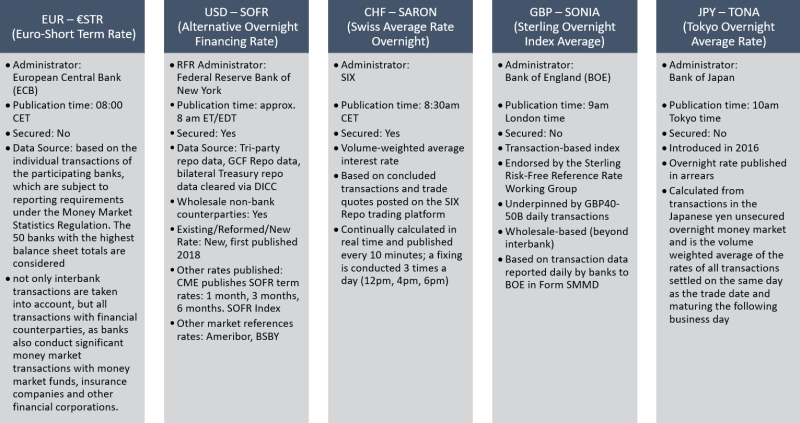
AFP and ION Treasury have launched a guide that outlines the main differences between the new risk-free reference rates identified to replace LIBOR. The guide identifies the key questions for treasurers to ask when negotiating a replacement rate with a counterparty, including the variables regarding the calculation of interest. It also suggests how best to ensure treasurers can calculate interest and value instruments following the transition to new rates. Replacement Risk-Free Rates Reviewed: ESTR (EUR), TONA (JPY), SARON (CHF), SONIA (GBP), and SOFR (USD). Maybe you will find these sources in tables also worthwhile to keep or hang it behind your desk. Here the link to our tomato publications:
Further details about the major new rates on our website.
2. Supply Chain Finance via TMS-Module
We first published this article a year ago, but since we noticed interest from corporates on this topic, we thought of bringing it back to your attention.
Around the year 2000, a TMS was able to transact FX, interest rate transactions, outgoing single manual treasury payments such as Swift MT101, Banks reported back the daily account balance with Swift MT940 for a financial status and liquidity planning. Further transaction in a TMS where bank loans, netting, guarantees.
10 years later in 2010 some TMS in Germany where able to connect via the newly EBICS and SWIFT gateways to the partner banks. Thus, it was possible to transport the ERP account payable file via the TMS to some of the banks. Today is it usual at least in central Europe to transport all mass payments such as account payables and payrolls to the banks via SWIFT and EBICS gateways.
Will Vendor Finance themes be a module of a TMS In the near future? Or also fraud detection?
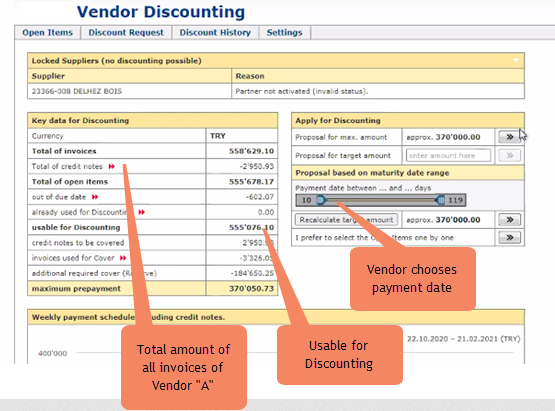
I do believe so. Over the last year, I've been researching various vendor finance tools and have come to the conclusion that the one I analyzed a year ago still looks excellent.
Each local unit of the company has the ability to negotiate with its local suppliers and banks in this vendor finance system. After the pre-negotiation with the vendors and banks, the basic data is set up by the corporate treasury, then the local vendors and banks can use their data within their contract area and in a way that allows the vendor to choose his own payment date.
Would it make sense to integrate such a system into a TMS? Can this be the future?
Are you interested in finding out more about the Vendis tool? Ask for information via martin.schneider@tomato.ch or +41 44 814 2001, see all screens here.
3. Hedging und Währungsmanagement
In unserem Juli 2021 Tomato-Newsletter haben wir eine beträchtliche Anzahl von Feedback zu unserem Link zu UBS und HSLU erhalten.
In der Zwischenzeit fanden wir einen weiteren Bericht zur Währungsabsicherung im « Der Treasurer», der 5 Fehler im Währungsmanagement beschreibt. Martin Schneider hinterfragt diese eher als Aufgabe und folgert: Mir persönlich scheint es logischer, die 5 Punkte ins Positive zu drehen. Somit weiche ich hier vom originalen Bericht etwas ab. Man möge mir dies verzeihen.
Wie und was sichern die Treasurer?
- Verbindung zum operativen Geschäft suchen und finden. Wann beginnt die Verhandlung zum Einkauf oder Vertrieb mit Partnern ausserhalb der lokalen Währung?
- Ist das Treasury überhaupt berechtigt einzugreifen? Wenn nein: Sind Treasury Policies / Hedging Strategien die Basis zum Handeln?
- Regelmässiges planmässiges Sichern - wenn möglich - Monate im Voraus. Nicht alles auf eine Karte setzen, sondern hedging in kleineren regelmässigen Beträgen und Zeitabständen.
- Fehlerkultur im Treasury: Rückblickend hinterfragen, wie präzis gesichert werden konnte. Mögliche Fehllokationen erkennen und diese optimiert einsetzen.
- Schuster bleib bei deinen Leisten: Einfache Plain Vanilla d.h. FX-Forward Transaktion haben sich über Jahrzehnte bewährt.
Hier geht es zu den 5 Punkten im Der Treasurer
Finanz-Risiko-Management mit dem Vorstand besprechen und Einigungen zu erhalten, können schwierig sein. Geben Sie nicht auf. Hier finden Sie unsere eigene Tomato-Erfahrung in einer Grafik ,die mehr aussagt als viele Worte:
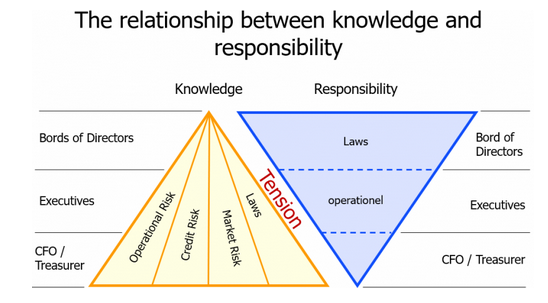
And to continue in English, read our Tomato article from 2013 by Allen Holland: https://www.tomato.ch/credit-risk-management.html. Nothing has changed since then.
4. Muster für den Konzerninternen Cash Pool-Vertrag
In den News vom Verband Deutscher Treasurer lesen wir den Bericht „Best Practices im Cash Management – Artikel 1 Bankkontenstruktur – Update 2021“.
Der VDT hat nachfolgend eine stichwortartige "Merkliste" zusammengetragen – ohne den Anspruch auf Vollständigkeit. Die Ausgestaltung der Verträge richtet sich nach den eigenen Geschäftsmodellen und deren Spezifika. Es ist zu beachten, dass die Liste den Austausch mit Juristen und Steuerberater einbezieht.
- Parteien, ICA (Intercompany Account)
- Parteien, Beitritt, Vergütung, Weitergehende Bestimmungen
- Die ICA-Beziehung und das ICA
- ICA-Verzinsung
- Das Cash Pooling
- Abführung und Inanspruchnahme von Liquidität
- Automatischer Liquiditätsausgleich
- Ursprungskonten
- Zielkonten
- Rechtsverhältnisse, Tilgungsbestimmungen
- Grenzen der Liquiditätsabführung (jeweils aus Sicht der Vertragsparteien)
Mitglieder des VDT können den Bericht vollständig herunterladen
Anmerkung von Martin Schneider: Aus unserer Erfahrung kann es keine Musterverträge geben, weil jeder Cashpool an dem Tomato mitwirkte eine komplett andere Basis hatte. Interne Cash-Pool-Verträge bedürfen der Genehmigung durch die jeweilige lokale Geschäftseinheit und deren Rechtsvertreter.
5. PCs Security – Choosing the Right Solution
According to the FBI, cyber-attacks have increased by 400%. Moreover, 2021 has broken the record for zero-day hacking attacks. At least 66 zero-days have been found, according to databases such as the 0-day tracking project—almost double the total for 2020, and more than in any other year on record.
Fortunately, there are certain security measures that enable us to work more securely from home or anywhere without the fear of cyber threats. An example is the Endpoint Protection Platform (EPP), which is a solution deployed on endpoint devices to prevent file-based malware, to detect and block malicious activity from trusted and untrusted applications, and to provide the remediation capabilities needed to respond to security incidents and alerts.
The 2021 Gartner Magic Quadrant for Endpoint Protection Platforms evaluates 20 Endpoint Protection Platforms (EPP) vendors. Vendors can be filtered by size, industry, and region, and you can also visualize lists with companies reviewed in the last 12 months or sort by the number of reviews, high to low.

6. Nobel Prize in Economic Sciences
This year's Nobel Prize in Economics goes to economists David Card (65, Berkeley University), Joshua Angrist (61, MIT) and Guido Imbens (58, Stanford), the youngest winners of this prize so far. The prize was divided, one half awarded to David Card "for his empirical contributions to labour economics", the other half jointly to Joshua D. Angrist and Guido W. Imbens "for their methodological contributions to the analysis of causal relationships."
The Prize for Economics was awarded for the first time in 1969, almost seven decades after the first award ceremony in 1901. It is the only prize that does not go back to Alfred Nobel's will but is donated by the Swedish Reichsbank - “in the memory of Alfred Nobel”.
Usually, the chances are good that the winner (s) of the Nobel Prize in Economics can be found on the “2021 List of Citation Laureates” . The list compiled annually by Clarivate (formerly Thomson Reuters) includes the economists whose research has been cited most frequently.
Year after year, Swiss economist Ernst Fehr from the University of Zurich has had a good chance of winning this prize. He has been on the Clarivate list of the most cited economists since 2009 and has been at the top of the NZZ economists ranking for years. Fehr has distinguished himself in the areas of experimental economic research and behavioral economics.
Ziehen Sie Deutsch vor? Die NZZ berichtet detailliert zu den drei Wirtschafts-Preis-Trägern. Hier die Details in der NZZ
7. Book Tip on Inflation: The Great Demographic Reversal
In "The Great Demographic Reversal: Ageing Societies, Waning Inequality, and an Inflation Revival", Charles Goodhart and Manoj Pradhan document what demographic changes are yet to come. Their book contradicts the conventional wisdom that inflation will not be a problem for years to come, if ever. The book is a pleasant read and easy to understand even for non-economists.
Among others, it tackles urbanisation of China and other economies in Asia and Eastern Europe, and the incorporation of many millions of low-wage workers into the global trading system. This put downward pressure on global prices and wages as employers in developed countries were able to "offshore" for years. Goodhart and Pradhan argue that a rising dependency ratio is inherently inflationary, as retirees consume but do not produce. Moreover, since a labour shortage drives up wages, workers are likely to consume more and firms will invest more to replace expensive labour and take advantage of new technologies.
An objective reader concludes that sustained, elevated inflation will be an essential part of the solution governments seek to get rid of the debt overhang. As for the "independence" of central banks, Goodhart and Pradhan suggest that it cannot be sustained in such circumstances
Ziehen Sie deutsch vor?
Charles Goodhart und Manoj Pradhan dokumentieren in «The Great Demographic Reversal» überzeugend, was geschehen ist und welche demografischen Veränderungen noch bevorstehen. Ihr Buch ist nicht nur gut argumentiert und voller gesundem Menschenverstand, sondern es ist auch mutig. Es widerspricht der herkömmlichen Weisheit, dass Inflation auf Jahre hinaus, wenn überhaupt, kein Problem mehr sein wird.
Glücklicherweise ist es so geschrieben, dass es auch für Nicht-Ökonomen angenehm zu lesen und leicht zu verstehen ist.
Die Öffnung und Urbanisierung Chinas sowie anderer Volkswirtschaften in Asien und Osteuropa sowie die Eingliederung vieler Millionen Niedriglohnarbeiter in das globale Handelssystem drückte auf die globalen Preise und Löhne. Die Arbeitgeber in den entwickelten Ländern konnten über Jahre «Offshoring» betreiben.
Goodhart und Pradhan argumentieren zu Recht, dass ein steigender Abhängigkeitsquotient von Natur aus inflationär ist, da Rentner konsumieren, aber nicht produzieren. Zudem treibt der Arbeitskräftemangel die Löhne in die Höhe, die Arbeitnehmer werden wahrscheinlich mehr konsumieren und die Unternehmen werden mehr investieren. So werden teure Arbeitskräfte ersetzt und gleichzeitig die Vorteile neuer Technologien genutzt.
Ein objektiver Leser kommt zum Schluss, dass eine anhaltende, erhöhte Inflation ein wesentlicher Teil der von den Regierungen angestrebten Lösungen sein wird, um den Schuldenüberhang loszuwerden. Was die «Unabhängigkeit» der Zentralbanken betrifft, so suggerieren Goodhart und Pradhan, dass sie unter solchen Umständen nicht aufrechterhalten werden kann.

8. Termine & Events
- Oct. 20+27, Nov 3, 2021: each from 09:15-17:15: IFZ Specialist Course Swiss Treasury Practice Current Challenges in Corporate Treasury by Lucerne University of Applied Sciences and Arts
- Oct. 24-27, 2021: Money 20/20, live event in Las Vegas, USA
- Nov. 4, 2021: Open Banking Expo, live event in London, UK
- Nov. 17, 2021: IACT Annual Treasury Management Conference 2021, hybrid event in Dublin
- from Nov. 18, 2021: Certified Corporate Treasurer VDT 2021 and 2022 course (held in german by the Association of German Treasurers).
The course comprises four modules of three days each, from Thursday to Saturday, and one module of four days each, from Wednesday to Saturday, with eight 45-minute teaching units per seminar day.
The course takes place at the Frankfurt School of Finance & Management, Frankfurt am Main.
Module 1: 18.11. - 20.11.2021
Module 2: 20.01. - 22.01.2022
Module 3: 03.03. - 05.03.2022
Module 4: 04.05. - 07.05.2022
Module 5: 23.06. - 25.06.2022
9. From the Desk of Tomato
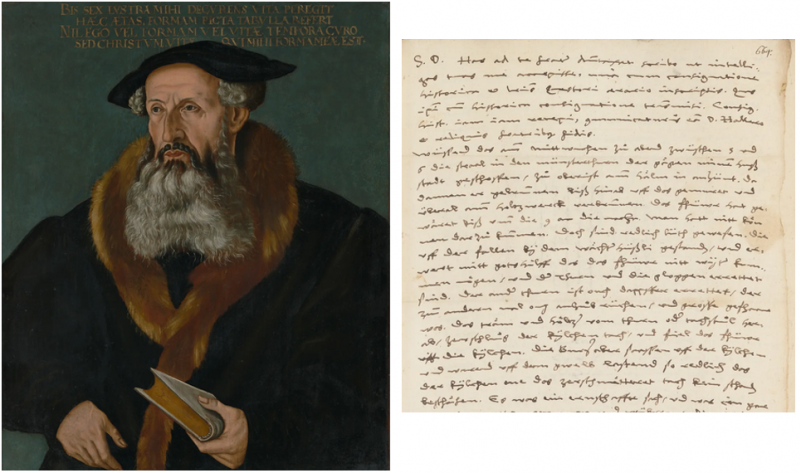
Did the internet already exist in the 16th century, or did it start a few decades ago? I have just read that the protestant Heinrich Bullinger, successor of Huldrych Zwingli in Zurich, exchanged more than 12,000 letters from 1531 to 1575 with many known and unknown people in Europe. About 3,000 letters have been analyzed. Now the foundation is missing liquidity to analyze the remaining 9,000 letters.
The Protestant Heinrich Bullinger presided over the Zurich church for many years. He sent letters via selected couriers. He wrote in Latin, German, Italian and French.
This correspondence was in addition to the profession of six to eight sermons weekly. More than a thousand addressees are known, in Switzerland and German-speaking countries, in Italy, France, England, Denmark and White Russia.
Bullinger communicated with theologians and reformers such as Luther, Melanchthon or Calvin, with humanists such as the St. Gallen scholar Vadian, or with princes such as the landgrave Philip of Hesse, but also with mayors, councilors, town clerks and bailiffs. With craftsmen who could write, or with students who lived in Paris, Frankfurt, London, Königsberg, Padua, Krakow or somewhere else and had interesting things to report. We also find letters from Bullinger writing to his son, a student in Strasbourg, and giving “parental guidance.” Political events also had their place, with discussions about the persecution of the Huguenots in France, the background to the Schmalkaldic War or the threat posed by the Turks. But everyday things also found their place. The Facebook of the 16th century?
Den ganzen Bericht lesen Sie im NZZ Feuilleton. Sollten Sie keinen Zugang haben fragen Sie martin.schneider@tomato für den vollständigen Bericht.
Enjoy Martin and the Tomato Team