TOMATO CATCH-UP - Newsletter Issue 214 – October 2018
Our Tomato Newsletter is a monthly compilation of subjects including working capital, process optimization and issues of interest relating to the world of corporate treasurers, IT professionals and bankers. We conceived of this newsletter as a resource for you and a way to catch up on happenings in your professional world.
Our newsletter is written in German and in English, the language used for the articles is that of the original information sources. Topics we consider timely or important can have German as well as English articles with short informational introductions.
Welcome to the (arguably) busiest season of the year. Brexit talks are currently at a stand-off ahead of the upcoming EU summit. As we’ve all heard through countless media outlets, The Association of Financial Markets in Europe, which represents the interests of around 40 of the largest banks in Europe and the UK, has written to the European Commission’s VP of financial stability to stress the need for steps to avoid market disruption. The threat of said disruption is becoming more and more urgent as the UK and EU have not been able to come to an agreement to date. As we continue to monitor we can’t help but wonder (and speculate) what all of this might mean in terms of regulations or de-regulations, laws and strategies that will evolve out of whatever agreement is reached. The trickle-down effect of such an agreement into all European financial institutions will be evident in the months and years to come.
This Year we will continue our Santa Claus Tradition At the end of the Newsletter please find our invitation to the Santa Claus Apero, to be held on the 29th of November. We look forward to seeing you there and until then wish you happy reading/gute Lektüre and much success.
Catherine Regan und the Tomato Team
- Zahlungsverkehrsrichtlinie PSD2
- Turbulenzen und Krisen sollten Ausnahmensituationen bleiben: Zeitzeugen 2008
- Negativzinsen - Profiteure sind die Banken / Negative Interest Rates in the Euro Zone
- The Blockchain (R)evolution
- Auch eine Blockchain kann angegriffen werden
- Swish the Swedish Mobile Payment System
- Tomato NL Millennials Series: Millennials and their Money
- Nobel - Preis für Wirtschaftswissenschaften / Romer and Nordhaus show the need for Global Cooperation to foster needed Change
- Tomato Agenda
1. Zahlungsverkehrsrichtlinie PSD2
Die PSD2 Verordnung ist seit Januar 2018 ohne die Schweiz in Kraft.
Als Nachfolgerin der Payment Services Direktive von 2007/64/EG nimmt die PSD2 die bisherigen IT-Entwicklungen im Zahlungsverkehr auf, verbunden mit dem Eintritt neuer Marktteilnehmer:
- Ab 2018 regelt die PSD2 den Zahlungsverkehr via Internet und Mobiltelefon
- Fordert strengere Sicherheitsanforderungen im Zahlungsverkehr
- Erhöht den Konsumentenschutz
- PSD2 öffnet den Markt für neue, bewilligungspflichtige Zahlungsverkehrsdienstleister
- PSD2 gilt im EWR Raum (also ohne die Schweiz)
Lesen Sie hier erstmals die Tomato-PSD2-Sicht in Text und Darstellungen. Wir werden diese Site laufend mit unserer Expertise ergänzen.
2. Turbulenzen und Krise sollten Ausnahmesituationen bleiben
Im Tomato Newsletter September Nr 213 berichteten wir zur Rettung der UBS vor 10 Jahren, nach dem Konkurs der Lehman Bros. Erfahren Sie von drei Schweizer Zeitzeugen, wie sie die sehr kritische Zeit in 2008 erlebt haben.
Interview mit Peter Kurer, damaliger Verwaltungsratspräsident der UBS in der NZZ:
«In einer Krisensituation macht man immer Fehler» - wie die Grossbank an den Rand des Untergangs geriet, wie sie gerettet wurde und welche Fehler zu vermeiden gewesen wären.
David S. Gerber (Eidg. Finanzverwaltung): Nur einmal im Leben – ein Beteiligter der UBS-Rettung zieht Bilanz. David Gerber war ab 2003 wissenschaftlicher Mitarbeiter und ab 2006 als Sektionsleiter Finanzmärkte und Finanzdienstleistungen in der EFV tätig. Die UBS-Rettung vor zehn Jahren entpuppte sich als Erfolg. Abgesehen von Umfeld und Glück nennt er vier Gründe, weshalb das riskante Vorhaben gelang:
- Das Undenkbare gemeinsam vorausdenken
- Laufende Umfeldanalyse und Ergebnisoffenheit in der Krise
- Entschlossenheit und Vehemenz bei der Instrumentenwahl
- Vertrauenswürdige Zusammenarbeit und krisenerprobte Führungskräfte
Der 16. Oktober 2008 wird allen Beteiligten unvergessen bleiben. An diesem Tag gaben der Bundesrat und die Schweizerische Nationalbank (SNB) das Massnahmenpaket zur Stabilisierung der UBS bekannt. Es stützte sich auf Notrecht und das Volumen entsprach mehr als dem Fünffachen der Kosten des Gotthard-Basistunnels. Glücklicherweise entpuppte sich die Staatsintervention als Erfolg, doch sie war nicht ohne Risiken. Weiter im Link der NZZ
Marcel Zimmermann, Geldmarkt und Devisenhandel von der SNB: “Milliarden-Belohnung» für starke Nerven“
Die SNB übernahm riskante Papiere der UBS von bis zu 60 Milliarden US-Dollar. Marcel Zimmermann und sein Team besprachen sich auch mit anderen Zentralbanken in Europa und es stellte sich heraus, dass tendenziell andere Beteiligte sich in anderen Ländern etwas langsamer organisierten. Schlussendlich konnte die SNB die toxischen Papiere mit einem Gewinn von CHF 5 Mrd. verkaufen.
Interview von Radio DRS im Echo der Zeit vom 16.10.2018
Heute wirkt wieder so, als ob sich Bank Manager sich Kopfzerbrechen machen über die «Langweiligkeit» ihrer Branche. Dabei ist es wichtig und gesund, dass die Regulatoren erfreut bleiben als auch Turbulenzen und Krisen das Weite suchen müssen.
Wir denken nicht, dass es bei den Banken an «Verkaufsschlagern» fehlt. Mehr im NZZ Bericht
3. Negativzinsen - Profiteure sind die Banken
Was ursprünglich nicht vorstellbar war (obwohl schon Alltag in Teilen der EU) ist heute ein Geldmacher: Negativzinsen. Anfang 2015 hat die SNB ein Negativzins-Regime eingeführt. Für Retail-Banken war das ein Schock. Mittlerweile haben sie sich angepasst – und sie verdienen mit den Negativzinsen mehrheitlich Geld. Hier der Bericht aus der NZZ
Negative Interest Rates in the Euro Zone
In mid-2014, the European Central Bank set interest rates at negative, or below zero. Denmark, Sweden, Switzerland and Japan followed suit. The idea for negative interest rates was to help incentivize borrowing and lending and to give needed impetus to struggling economies. Has this plan worked? What are the results? How is this impacting the European consumer and monies held in pension funds? Find opinion and discussion on these topics in the linked articles below:
Article from Investopedia and Article from NY times
4. The Blockchain (R)evolution the Swiss Perspective
Blockchain technology is very much a trending topic, and Deloitte Switzerland is pleased to be able to give you an insight into it with this publication. We herein focus on how Blockchain is seen by the Swiss market, which offers the Blockchain community huge potential as a place in which this technology can be developed and used, of which the prominence of Zug’s Crypto Valley provides the most convincing evidence. Details here
5. Auch eine Blockchain kann angegriffen werden
Das Video aus Finanz und Wirtschaft zeigt wie es geht und welches die Risiken sind.
6. Swish the Swedish Mobile Payment System
During a recent holiday in Sweden Martin learned about a promising new payment modality in Sweden. Swish is a mobile payment system from Sweden: A service that was launched in 2012 by six large Swedish banks, in cooperation with the Central Bank of Sweden. Today Swish has 6.5 million users which shows remarkable market penetration at a population of 10 million in Sweden.
Swish, a Swedish mobile app is a system that works well to be able to transfer money directly from one person to another. The only caveat is that both parties have an active bank account. Other countries can consider implementing this type of system, especially in places where credit lines and credit cards are not the desired mode of payment. There is a real market for this type of app, which was originally intended for transactions between individuals. As such, Swish is used for transactions that used to be mostly cash-based, and, best of all, the service is free Follow the Link in Wikipedia
We’re interested in your feedback about similar apps or services that allow cashless payments to be easily made directly from person to person. Please share with Martin Schneider +41 44 814 2001
7. Millennials and their Money
As we introduced in our September NL, we are continuing to include articles highlighting millennials as a group and how they are being studied/monitored for various reasons, our focal point naturally being to feature this newer and largest demographic specifically with regards to money, spending habits and new ways of looking at finance in general.
Making money: how millennials differ How millennials are making money
Facts and statistics gathered by marketers showing how to financial institutions can serve this new generational group more effectively read more in millennials banking trends
Infographic showing issues that face millennials around money and how these differ from previous generations see details here spending trends of millennials, infographics
8. Nobel - Preis für Wirtschaftswissenschaften
William Nordhaus und Paul Romer erhalten den 50. Nobelpreis für Wirtschaftswissenschaften. Beide haben neue Ansätze zur Bestimmung des langfristigen Wirtschaftswachstums entwickelt. Sie zeigen in Ihren Studien klar den Weg zum gesunden Wachstum und die Dringlichkeit von Globaler Kooperation um nötige Änderungen voranzutreiben. Details in der Zeit.de
Romer and Nordhaus show the need for Global Cooperation to foster needed Change
The Nobel prize in economics was awarded to Yale economist William Nordhaus in collaboration with Paul Romer from New York University. Nordhaus has dedicated much of his illustrated career in economic policy research to the effects of climate change on government policy, including many widely accepted (in academic circles) proposed changes to aid both the environment and stabilize economic growth without massive fluctuations. Romers work concurs with this vein of thought showing proof of how governments can foster changes in technology to the benefit of national and global economies.
Nov. 21 + 22, 2018: Structured FINANCE – Congress in Stuttgart
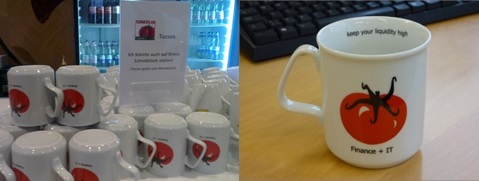
Tomato Mugs will be displayed once again at the Structured Finance
Wir knüpfen an die Erfolge der Vorjahre an. Wiederum trinken Sie Ihre Getränke aus Tomato-Tassen, erhältlich bei der Kaffeebar. Details... (German)
Nov. 27,2018: SIX Update im SIX ConventionPoint in Zurich
Aktuelles in der Rechnungslegung und Finanzberichterstattung:
Christoph Michel, Jolanda Dolente und Frederik Schmachtenberg, EY, zeigen die Entwicklungen in den Rechnungslegungsstandards IFRS und Swiss GAAP FERsowie auch die beidenIASB Projekte und die aktuellen Diskussionen zu den Themen „Goodwill Impairment" und „Better Communication". Details
Nov. 29,2018: Santa Claus Apéro:
Wie meist gegen Ende des Jahres schwebt Santa Claus an unseren Tomato-Fenstern vorbei und setzt zur Landung in Zürich-Kloten an, in diesem Jahr mit einem besonderen Leckerbissen: Cornelia Ruppert Flugbegeisterte Pilotin von Ruppert Composite ist zu Gast.
Wollen Sie mehr zu ihrem Archaeopteryx wissen?
Wir bitten um Ihre Anmeldung, die Teilnehmerzahl ist begrenzt.
We’d like to see you at our annual Sami Chlaus Apero, for more info click here Read more...
Please RSVP to Martin Schneider +41 44 814 2001